



Primary Tooth Extraction
What Is a Primary Tooth Extraction?
Primary tooth extraction is the procedure performed by a dentist to remove temporary teeth that do not fall out on their own despite becoming loose, or that cannot be saved because of deep decay. This method is generally used in cases of persistent infections that develop at the tooth root or to make room for the permanent tooth coming in underneath.
Generally, before a primary tooth extraction, the area is numbed with child-friendly fruit-flavored gels and local anesthesia to prevent pain. If the space is not preserved after extraction, neighboring teeth may shift; therefore, your dentist may use space maintainers if necessary. This intervention is a critical step in preventing future dental crowding and protecting oral health.
What Is the Easiest Way to Remove a Baby Tooth?
The golden rule for removing a baby tooth in the easiest and most painless way is to make sure that the root attachment has completely detached and that the tooth is extremely loose. If the tooth is only attached to the gum by a thin strand of tissue, it may be removed by gently grasping it with sterile gauze and twisting it slightly.
To reduce the child’s fear, applying ice to the area beforehand to create mild numbness can make the process much easier. In addition, biting into a firm apple or carrot is one of the most natural methods that may help the tooth fall out on its own without trauma. If the tooth is still resistant, forcing it may cause root fracture; in that case, the healthiest option is to consult a dentist.
The Importance of Primary Teeth and Our Treatment Approach
Primary teeth usually begin to erupt around the 6th month after birth and are completed by the age of 3. These 20 teeth play a critical role in a child’s physical development. By performing the chewing function, they help initiate the healthy functioning of the digestive system. At the same time, they contribute to speech development by enabling sounds to be pronounced correctly. Perhaps their most important role is that they act as natural space maintainers for the permanent teeth that will erupt underneath. By preserving their position, primary teeth help prevent permanent teeth from erupting crookedly or remaining impacted.
For this reason, our priority with the little patients who come to our clinic is always to preserve the tooth in the mouth through treatment whenever possible. If there is a chance to save the tooth with methods such as fillings, pulpotomy, or root canal treatment, we leave extraction as the last option. However, we decide on extraction in cases where the infection has spread to the bone tissue, the tooth cannot be restored because of severe destruction, or it is blocking the eruption of the permanent tooth. When making this decision, we use radiographic imaging and carefully analyze the condition of the roots and the stage of development of the permanent tooth underneath.
Medical Conditions That Require Primary Tooth Extraction
The decision to extract a primary tooth is made not only to relieve pain at that moment, but also to protect long-term oral health. Sometimes parents notice that the tooth is loose and consider removing it at home, but this is not always the healthiest approach. Especially in cases where root resorption has not been completed, attempts made at home may lead to root fractures or damage to the gum tissue. The main situations that make extraction necessary after a professional evaluation can be listed as follows:
- Persistent abscesses at the root tip that do not respond to antibiotic treatment
- Cases where tooth decay has progressed to the furcation area where the roots separate
- Persistent primary teeth that do not fall out even though the permanent tooth has started to erupt
- Teeth fractured due to trauma such as falls or impacts and that cannot be restored
- Teeth that need to be extracted to gain space as part of orthodontic treatment planning
- Primary teeth that cause the permanent tooth to erupt from the wrong position (ectopic eruption)
If any of these conditions are present, we perform the extraction without delay in order to prevent the infection from damaging the permanent tooth bud or to avoid future orthodontic problems.
In Which Cases Does Primary Tooth Extraction Become Necessary?
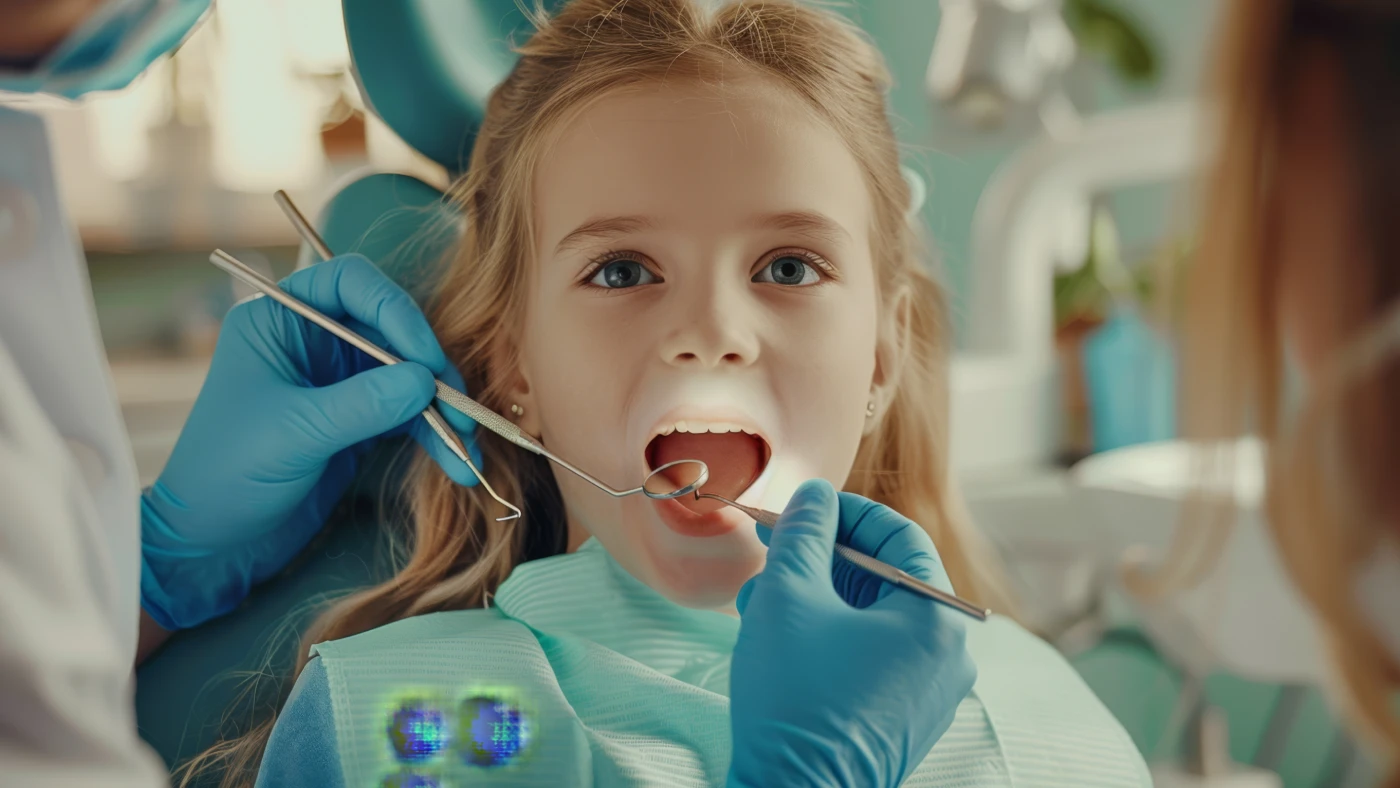
As dentists, our priority is always to save the tooth and keep it in the mouth whenever possible. Even severely damaged teeth are first evaluated for treatment with methods such as root canal therapy in children (including pulpotomy or pulpectomy) and fillings. However, there are some situations in which extraction becomes the healthiest and only option. One of the main reasons is deep decay that has caused extensive structural loss beyond repair. If the decay has progressed down to the roots and caused bone loss in the furcation area, the tooth becomes a source of infection. In order to protect the child’s overall health and avoid disrupting the calcification and development of the permanent tooth underneath, that tooth may need to be extracted.
Another reason that may make extraction necessary is trauma. Because children are active by nature, they are more prone to falls and impacts. If a severe injury causes a root fracture, or if the tooth becomes excessively mobile and carries the risk of damaging the permanent tooth bud beneath it, extraction may be recommended. In addition, as part of orthodontic treatment planning, even healthy primary teeth may sometimes need to be extracted in children with narrow jaws in order to create space. This is a strategic decision made entirely according to the orthodontist’s treatment plan.
What Happens If a Baby Tooth Is Extracted Early?
If a baby tooth is extracted too early, the eruption path of the permanent teeth may be disrupted and alignment problems may develop. This can increase the likelihood of orthodontic treatment in the future. In particular, if a space-maintaining appliance is not used to preserve the position of the extracted tooth, the gap may gradually close over time. Neighboring teeth may shift into that space and lead to crowding. In addition, changes in chewing function and delays in speech development may also be observed. If a primary tooth is extracted early because of infection or trauma, the child should continue attending regular dental check-ups.
Child Psychology and Painless Treatment
For children, the dental chair can feel like an unfamiliar and frightening place. To help change this perception, we use child-friendly, play-based treatment approaches in our clinic. Before the procedure, we explain the tools we will use in a way the child can understand and allow them to express their fears. Thanks to the Tell, Show, Do technique, the child knows what to expect, which helps build trust and lowers anxiety.
Our greatest sensitivity during extraction is pain control. To numb the gum, we first apply fruit-flavored topical gels or sprays. This way, children feel little to no discomfort from the needle. Once the local anesthesia has taken full effect, the child usually feels only slight pressure, but not sharp pain. For children who are highly anxious, unable to communicate, or have special needs, we may also use advanced methods such as sedation or general anesthesia to ensure that the procedure is as physically and emotionally comfortable as possible. Our goal is for the child to leave the clinic smiling and to build a positive foundation for future dental treatments.
Advice for Parents After Primary Tooth Extraction
Although primary tooth extraction is a surgical procedure, the healing process is usually quick and uneventful. Still, there are several important points that both parents and children should follow to help recovery go smoothly. Immediately after the procedure, the sterile gauze placed on the area should be bitten down on for about 30 minutes. This pressure helps stop the bleeding and supports the formation of a healthy blood clot. After the gauze is removed, a new piece of cotton should not be placed in the area, and the child should avoid frequent spitting, as this may disturb the clot and cause bleeding to restart.
We also recommend that the child avoid eating anything until the numbness wears off, which usually takes around 2 hours. While the area is numb, the child may accidentally bite the cheek or lip without realizing it. Once eating begins, very hot and very cold foods should be avoided during the first 24 hours, and soft, lukewarm foods should be preferred. Using a straw is not recommended, as the suction effect may trigger bleeding. Keeping the extraction area clean is also essential to reduce the risk of infection; gentle brushing can usually be resumed from the next day onward.
Managing Infected Primary Teeth
In some cases, children come to our clinic with primary teeth that have developed large abscesses at the root tip or infections causing swelling in the face. In these acute infection cases, anesthesia may not fully penetrate the tissue, which can make the procedure painful. There is also a risk that the infection may spread into the bloodstream. For this reason, if there is facial swelling or signs of general illness such as fever or fatigue, we may choose not to perform the extraction immediately. Instead, we often first control the infection with appropriate antibiotic treatment, reduce the acute symptoms, and then carry out the extraction safely afterward. This approach is the safest option for the child’s comfort and health.
Primary tooth extraction is only a small stage in your child’s oral health journey. In our clinic, we work to make this stage something remembered not with fear, but as a healthy and well-managed experience. With our specialist pediatric dentists, experienced support staff, and child-friendly clinical environment, we are here to protect the smiles of what matters most to you. Through timely interventions and preventive care when needed, we help lay the foundation for a lifetime of healthy teeth. Remember, early diagnosis and proper treatment planning can protect your child from many dental problems in the future.