


Broken Tooth Treatment
Broken teeth are both aesthetically and functionally distressing. Broken teeth can occur due to sudden trauma, biting hard objects, or due to weakened teeth from decay. If not treated early, it can lead to pain, infection, or tooth loss. Fortunately, modern dentistry offers many effective solutions for broken tooth treatment.
In this article, we will explore in detail why broken teeth occur, what symptoms they show, and the most suitable treatment methods. We will provide clear answers to questions such as what treatments are applied based on the degree of the break, when a root canal is required, and when tooth extraction becomes necessary.
What is Broken Tooth Treatment?
Broken tooth treatment is a dental procedure used to restore the structure and function of a cracked or broken tooth. The treatment method varies depending on the size and location of the break. Small cracks are typically repaired with fillings or bonding, while larger damages may require root canal treatment and crowns. In severe breaks that reach the tooth root, tooth extraction and implant treatment may be preferred.
Early broken tooth treatment increases the chances of saving the tooth and prevents pain. To achieve a natural appearance aesthetically, materials such as porcelain or zirconium are used.
What to Do Immediately After a Tooth Breaks?
Time management is critical for saving the tooth once it breaks. If a piece of the tooth has broken off, it is important to find and preserve that piece. The broken piece should be gently washed with clean water and stored in milk if available, or in the patient's own saliva, and delivered to a dentist as soon as possible.
Milk is one of the best liquids for preserving the viability of tissue cells. If there is bleeding in the area, apply pressure with clean gauze, and apply cold compresses from the outside to reduce swelling. For pain control, avoid taking blood-thinning medications like aspirin without a doctor's recommendation, as this could make it harder for the bleeding to stop.
Diagnosis and Treatment Planning
During the first examination at the dentist's office, the depth of the break and the vitality of the tooth are tested. Radiographic imaging methods are used to determine whether the break is only in the enamel layer or if it has reached the root. If the break is only in the enamel layer, a simple polishing procedure or filling may suffice. However, in cracks that reach the dentin layer or the pulp containing the nerves, more comprehensive treatments come into play.
Whether the break is below the gum level is also a critical factor in determining the treatment plan. In vertical breaks that reach the root, unfortunately, the chances of saving the tooth decrease, and extraction may be the final decision.
How is Broken Tooth Treatment Done?
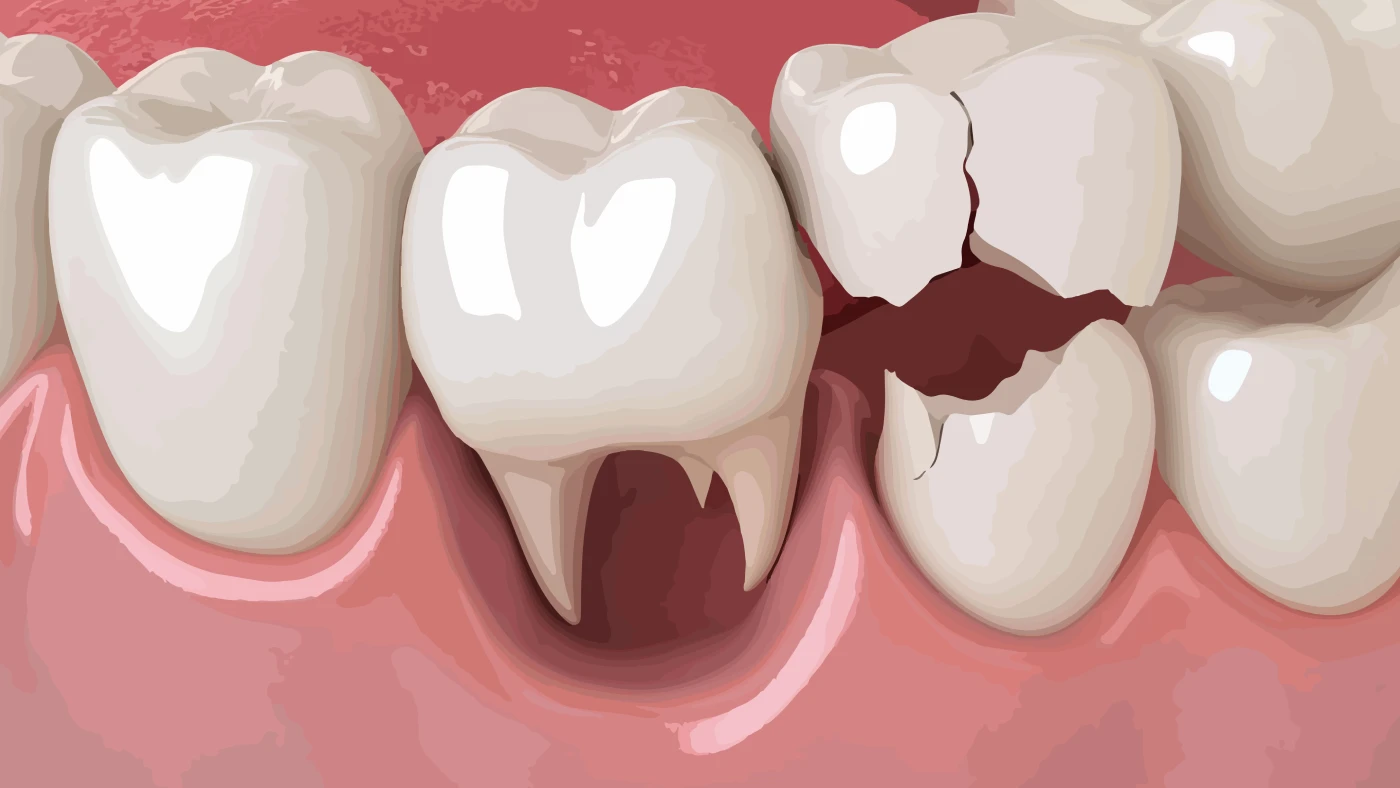
Broken tooth treatment varies depending on the degree and location of the break. Damage can range from slight cracks to root fractures. Therefore, the answer to the question "how is broken tooth treatment done?" is shaped by a personalized evaluation.
- Surface Cracks (Enamel Cracks): For minor cracks or surface cracks, composite filling (bonding) is usually sufficient. The treatment restores both the aesthetics and function using materials that match the color of the tooth.
- Medium Severity Cracks: If the break has reached the tooth's dentin layer, a filling might not be sufficient. In this case, porcelain crowns or laminate veneers are applied to restore both aesthetics and durability.
- Deep Cracks Reaching the Nerve: If the crack reaches the nerve tissue of the tooth, a root canal (endodontic treatment) is necessary. After the nerve is removed, the tooth is restored with a filling or crown.
- Root Fractures: If the root is fractured, the chances of saving the tooth are significantly lower. In this case, tooth extraction might be required. After that, the gap is filled with an implant, bridge, or prosthesis.
- Emergency Situations: If the broken tooth is painful, has hot/cold sensitivity, or is bleeding, you should immediately see a dentist. Delayed intervention can lead to tooth loss.
Nerve Damage and the Need for Root Canal Treatment
If the break reaches the nerve and blood vessels in the center of the tooth (pulp), severe pain and sensitivity are inevitable. In such cases, there is a risk that bacteria could reach the nerve tissue and cause infection. To save the tooth, root canal treatment must be applied first. The damaged or infected nerve tissue is removed, the canals are cleaned, and the tooth is sealed properly. After root canal treatment, the tooth is reinforced with fiber posts and restored with a filling or crown. This allows the tooth to stay functional in the mouth, even though it has lost its vitality.
Factors Determining the Treatment Method
When creating the treatment plan, the dentist evaluates both the patient's general condition and the characteristics of the tooth as a whole.
The key criteria considered in this evaluation process are as follows:
- The location of the crack: whether it's in the enamel, dentin, or pulp.
- The tooth's position in the mouth and its aesthetic importance.
- The amount and quality of the remaining healthy tooth tissue.
- The patient's age and any parafunctional habits like teeth grinding.
- Whether the break is below the gum line.
As a result of analyzing these factors, the longest-lasting and most protective treatment option is offered to the patient.
What to Do After Broken Tooth Treatment
After the broken tooth treatment is completed, the patient plays an important role in extending the life of the restoration. Especially after bonding or laminate procedures on front teeth, it is recommended not to bite hard foods, and not to break shell foods with the teeth. If the patient has a teeth grinding (bruxism) habit, a night guard should be made to protect the restorations.
Paying attention to oral hygiene, using dental floss, and having regular dental check-ups helps prevent secondary cavities that may develop around fillings or crowns. For individuals who engage in high-risk sports, using a mouthguard is crucial to prevent new fractures.