



Crown Dental Veneer
Crown dental veneer treatments, which we apply to restore both the functional and aesthetic qualities lost in teeth, are one of the most fundamental and reliable solutions in modern dentistry. With the crown applications performed at our clinic, we protect and extend the lifespan of damaged or aesthetically compromised teeth by covering them like armor. In this comprehensive guide, we have detailed all the aspects of the crown dental veneer process, including the materials we use and our treatment approach.
What is a Crown Dental Veneer?
A crown dental veneer is a fixed restoration that protects and strengthens the entire damaged or weakened tooth.
It is usually preferred for large cavities, fractures, post-root canal treatment, or aesthetic purposes. Crowns can be made from various materials such as metal-supported porcelain, zirconium, or full ceramic. The tooth is first reduced, and then a custom-made crown is bonded to the tooth. It enhances functionality while providing a natural appearance. Regular oral care is important for long-lasting results. Crown dental veneers are solutions that offer both aesthetics and durability at the same time.
Materials Used in Crown Dental Veneers
The key to success in crown dental veneers is selecting the right material, and we offer the most up-to-date options to our patients. Although metal-supported porcelains, which were commonly used in the past, are durable, they are no longer our first choice for aesthetic regions due to their gray reflection at the gum line and low light transmission. We mainly prefer metal-supported porcelain crowns in the back teeth and in cases where chewing pressure is very high as an economical option.
In modern aesthetic dentistry, we predominantly use zirconium and full ceramic crowns (such as Emax), which are considered the gold standard. Since zirconium is a white alloy, it combines the durability of metal with the aesthetics of porcelain. Thanks to its high light transmission, we can mimic the depth and vitality of natural teeth. Emax crowns, which are made entirely of glass ceramic, are unrivaled, especially for aesthetic purposes in the front region.
How is a Crown Dental Veneer Applied?
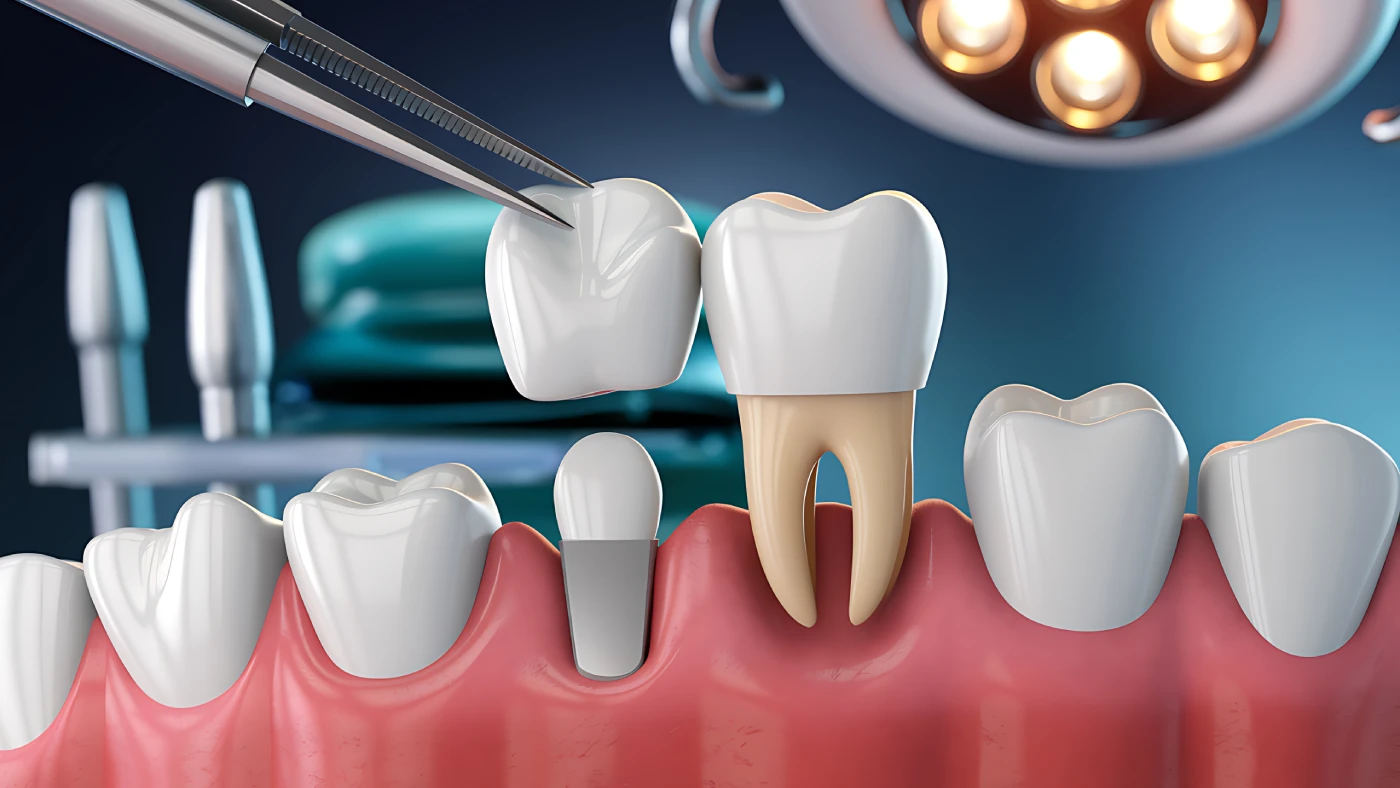
The crown dental veneer process starts with the reduction of the tooth, followed by taking measurements and preparing a custom-made crown.
In the first step, the dentist shapes the tooth appropriately for the crown to fit. Then, precise measurements are taken and sent to the laboratory. During this process, a temporary crown is placed. The crown prepared in the laboratory arrives at the clinic within a few days. In the final appointment, the crown is permanently bonded to the tooth, and its fit is checked. Depending on the material choice, a zirconium, porcelain, or metal-supported crown can be applied. The process is generally painless and is performed under local anesthesia.
Who is it Suitable For?
1. Individuals with a tooth that is largely decayed or cannot be saved with a filling: When the solid part of the tooth is insufficient, a crown provides protection by covering the entire tooth.
2. Those with broken or cracked teeth: Crowns are preferred to strengthen and protect teeth that are broken due to trauma, excessive pressure, or accidents.
3. Teeth that have undergone root canal treatment: After root canal therapy, the structure of the tooth weakens. A crown supports the long-term durability of this tooth.
4. Teeth with shape or color changes: Crowns are a good solution for aesthetic problems, especially with front teeth.
5. Individuals with worn-out teeth: The shape of worn teeth due to bruxism (teeth grinding) or incorrect brushing habits can be restored with a crown.
6. Teeth used as support for bridges in cases of tooth loss: If a bridge is to be placed, crowns are used to support the bridge by covering healthy teeth.
Inappropriate Conditions
Individuals with active gum disease should undergo periodontal treatment first.
If a tooth needs to be extracted, alternatives such as implants should be considered instead of a crown.
Crown dental veneers are a permanent solution that provides both functional and aesthetic benefits. However, since each patient's condition is different, the most accurate planning should be done through a dental examination.
Crown Dental Veneer Types
The type of crown to be applied to each tooth is determined based on the case. We summarize the types of crowns we use in our clinic and their application areas as follows:
- Zirconium Crowns: For both front and back teeth, providing aesthetics and durability.
- Emax Full Ceramic Crowns: For maximum aesthetics and natural appearance in the front region.
- Metal-supported Porcelains: For economical and durable solutions in back teeth.
- Monolithic Zirconium: For patients with high risk of fractures, such as those with bruxism.
- Implant-supported Crowns: Crowns placed over implants to replace missing teeth.
How Long Do Crown Dental Veneers Last?
Crown dental veneers can last between 10 and 15 years with proper care.
This duration depends on the material used, the patient's oral hygiene, teeth grinding habits, and regular dental check-ups. Zirconium and full ceramic crowns are aesthetically advantageous and successful in terms of durability. Metal-supported crowns are long-lasting but more limited in terms of aesthetics. Simple measures like using dental floss, regular brushing, and avoiding hard foods can extend their lifespan.
Are Crown Dental Veneers Healthy?
Crown dental veneers, when applied correctly, are a safe treatment that preserves the tooth's function and ensures healthy long-term use. Crowns, prepared to fit the oral structure, protect the tooth from external factors and enhance chewing function. Material selection and the dentist's experience directly affect the success of the treatment. Biocompatible materials such as zirconium and porcelain work well with the gums and have a low risk of causing allergic reactions.
With proper oral care, gum problems can be prevented. Regular dental check-ups are essential to maintain the health of the tooth beneath the crown. When done with the right technique, a crown dental veneer is a healthy solution both aesthetically and functionally.